Astrology
 Ayurveda
 Palmistry
 Vastu
Vastu
Views: 1249
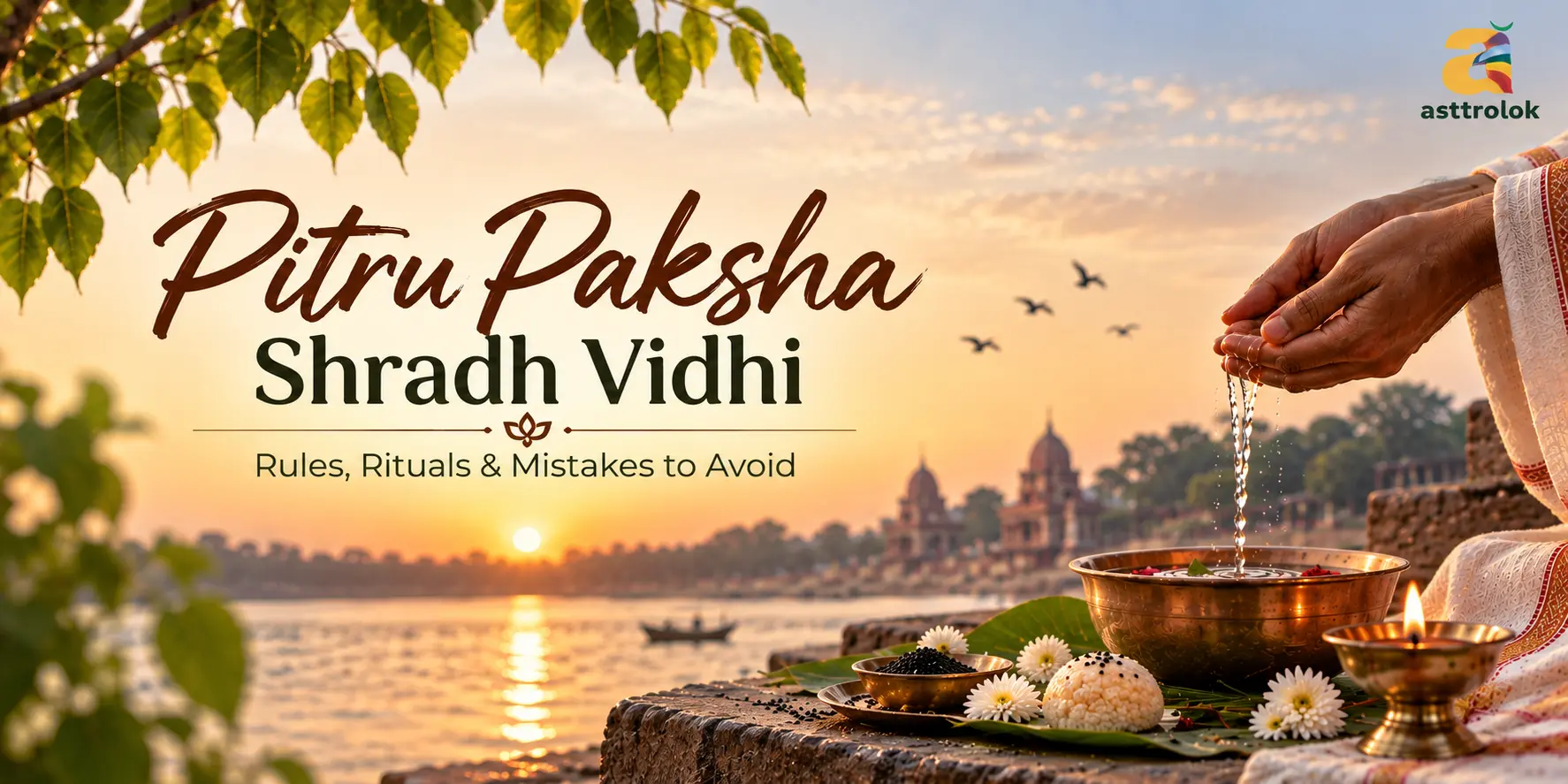
In many Indian homes, Pitru Paksha brings a quiet change in the atmosphere. Families remember their parents, grandparents and other ancestors, prepare traditional food and take time for prayers and offerings. It is not simply about following a list of rituals. For many families, it is a period of remembrance, gratitude and respect for ancestors.
Shradh during Pitru Paksha is traditionally performed according to the Tithi associated with the departed family member. The rituals may include Sankalp, offerings, Tarpan, food, prayers, charity and, in some traditions, Pind Daan.
At the same time, people often have many questions: What should be done? What should be avoided? Can Shradh be performed at home? What happens if the Tithi is missed?
This guide explains the Pitru Paksha Shradh Vidhi, important rules and the common mistakes families should try to avoid.
What Is Shradh During Pitru Paksha?
Shradh is a traditional Hindu practice of remembering and honouring departed ancestors through prayers and offerings. The word is closely associated with Shraddha, meaning faith, sincerity and respectful devotion.
During Pitru Paksha, Shradh is generally performed according to the lunar Tithi on which the ancestor passed away. Regional and family traditions can differ, so there is no single procedure that applies identically to every household.
The purpose is less about performing an elaborate ceremony and more about approaching the observance with faith, cleanliness, sincerity and remembrance.
Pitru Paksha Tithi and Shradh Dates 2026
In 2026, the Pitru Paksha observances begin with Purnima Shraddha on 26 September. The Tithi-wise Shraddha continues through the following days, ending with Sarva Pitru Amavasya on 10 October 2026.
The exact Shradh Tithi and ritual timing should be checked according to your city and family tradition because Panchang calculations can vary by location.
How to Perform Shradh During Pitru Paksha
The exact Shradh Puja Vidhi differs between communities, but a traditional observance may broadly include these steps:
1. Begin With Cleanliness and Sankalp
Take a bath, wear clean clothes and prepare the place where the ritual will be performed. The person performing the ceremony makes a Shradh Sankalp, remembering the ancestor and stating the intention of the ritual.
2. Offer Tarpan
Pitru Tarpan generally involves offering water, often with sesame and other prescribed items, while remembering the ancestors. In many traditions, Tarpan is an important part of Shradh.
3. Prepare Traditional Food
Families commonly prepare Shradh food that is simple and sattvic according to their traditions. Items may include rice, dal, seasonal vegetables, roti, kheer and other family-specific preparations.
4. Make the Offerings
Food and other offerings are made according to the family's customary ancestor worship rituals. Some traditions also include feeding Brahmins or offering food to animals and birds.
5. Prayer and Charity
The ritual may conclude with prayers, remembrance and acts of charity or donation. The intention is to express gratitude rather than treat the ritual as a transaction.
Tarpan and Pind Daan: What Is the Difference?
These two terms are often used together, but they are not exactly the same.
Tarpan primarily refers to ritual offerings of water and other prescribed substances in remembrance of ancestors.
Pind Daan involves offering ritual pindas, traditionally prepared using ingredients such as rice and sesame, depending on the tradition.
Both may form part of Pitru Paksha rituals, but whether and how they are performed depends on family customs, regional practices and the specific ritual being followed.
For example, traditional Shraddha observances in different parts of India can look quite different. In some regions, Tarpan has greater prominence, while Pind Daan has a particularly important place in North Indian traditions.
Who Can Perform Shradh?
This is one area where people often receive conflicting advice.
Traditions regarding who can perform Shradh vary between families, communities and regional practices. In some traditions, specific family members are given the primary responsibility, while in others, another eligible relative may perform the ritual when necessary.
Questions such as Can daughters perform Shradh? or Can women perform Shradh? therefore should not be answered with one universal rule.
If your family has a specific traditional procedure, follow it. If there is uncertainty because the usual person cannot perform the ceremony, seeking guidance from a knowledgeable priest or astrologer familiar with your family tradition can be helpful.
Important Pitru Paksha Rules and Do's & Don'ts
There is no need to turn Pitru Paksha into a period of fear or excessive restriction. The basic idea is to maintain a respectful and disciplined routine.
Do:
Maintain personal and household cleanliness.
Follow the correct Shradh Tithi as per your local Panchang.
Keep food preparations simple and appropriate to your tradition.
Remember ancestors with sincerity.
Perform Tarpan correctly if it is part of your family practice.
Give food, charity or donations according to your customs.
Maintain a peaceful and respectful atmosphere.
Avoid:
Performing rituals casually without understanding what they mean.
Treating Shradh as a way to guarantee material benefits.
Ignoring the correct Tithi without checking alternatives.
Mixing several traditions without understanding their procedures.
Creating fear around ancestors or Pitru Dosha.
Turning the observance into an occasion for unnecessary arguments or showmanship.
These Pitru Paksha dos and don'ts are best understood as guidance for maintaining the spirit of the observance rather than as a reason for anxiety.
Common Pitru Paksha Mistakes to Avoid
Many Pitru Paksha common mistakes happen because people focus on doing everything perfectly instead of understanding the purpose.
1. Choosing the Tithi Without Checking Properly
The Shradh Tithi is traditionally connected with the lunar date of the ancestor's death. If you are unsure, verify it through a reliable Panchang or knowledgeable practitioner.
2. Copying Someone Else's Ritual
A ceremony followed by one family may not be identical to another family's tradition. Regional customs matter.
3. Confusing Tarpan, Shradh and Pind Daan
These practices are related but have different meanings and procedures. Treating them as interchangeable can lead to mistakes.
4. Focusing Only on Food
Food is an important part of many Shradh traditions, but the observance is not simply about preparing a meal. Remembrance, prayer and sincerity are equally important.
5. Performing Rituals Out of Fear
This is perhaps the biggest mistake. Pitru Paksha should not become a period of constant fear about bad luck, family problems or punishment from ancestors.
6. Ignoring Family Tradition
Generic information from the internet may not always match your community's customs. When there is a genuine difference, understand your family's tradition before changing the procedure.
What Food Is Prepared During Shradh?
Pitru Paksha food is generally kept simple and sattvic in families that follow these traditions. Common preparations may include rice, dal, vegetables, roti, kheer and other home-cooked dishes.
Food restrictions can differ between communities. Rather than following random lists circulating online, follow the food practices traditionally observed by your family.
Similarly, questions such as whether one can eat non-vegetarian food during Pitru Paksha should be answered according to one's family and regional tradition. If your household traditionally follows a vegetarian or sattvic routine during Shradh, maintaining that practice is the simpler approach.
Can Shradh Be Performed at Home?
Yes, many families perform Shradh rituals at home, while others visit temples, sacred places or invite a priest.
A simple home observance may include cleanliness, Sankalp, prayer, Tarpan and appropriate offerings according to family tradition. More elaborate ceremonies, particularly those involving specific Pind Daan procedures, may require a knowledgeable priest.
The important point is to avoid improvising complicated rituals simply because they appear on social media.
Pitru Paksha and Vedic Astrology
Pitru Paksha Astrology can provide another perspective on ancestral traditions. In Vedic Astrology, concepts such as Pitru Dosha, Pitru Rin and ancestral karma are discussed in certain Jyotish traditions.
However, Pitru Dosha should not be diagnosed simply because someone experiences delays in marriage, career challenges, financial problems or family disagreements. A proper Kundli needs to be examined in context.
Astrology can be used as a reflective tool to understand traditional interpretations and suggest spiritual practices. It should not be used to create unnecessary fear.
At Asttrolok, this broader approach to astrology is part of the learning philosophy associated with Mr. Alok Khandelwal Ji, who focuses on making Vedic knowledge practical and understandable.
If you want to understand astrology systematically rather than relying on isolated predictions, Asttrolok offers online astrology classes covering foundational and advanced areas of Vedic Astrology.
For people looking for personal guidance around their birth chart, timing and spiritual practices, an online consultation can provide a more individual approach than generalised astrology content.
Similarly, a personalized Kundali can help when someone wants to study their chart in greater detail instead of applying generic remedies or predictions to their life.
Hindi Mein Shradh Ka Mahatva
पितृ पक्ष में श्राद्ध केवल एक धार्मिक रस्म नहीं माना जाता, बल्कि यह अपने पूर्वजों को याद करने और उनके प्रति कृतज्ञता व्यक्त करने का अवसर भी है। परिवार अपनी परंपरा के अनुसार तर्पण, भोजन, प्रार्थना और दान करते हैं। सबसे जरूरी बात यह है कि श्राद्ध श्रद्धा और शांति के साथ किया जाए, डर या दिखावे के साथ नहीं।
अगर आपको Pitru Paksha mein Shradh kaise kare, कौन-सी तिथि सही है या परिवार की परंपरा के अनुसार कौन-सी विधि अपनानी चाहिए, इसको लेकर भ्रम है, तो किसी योग्य पंडित या अनुभवी ज्योतिषी से व्यक्तिगत सलाह लेना बेहतर रहता है।
Bonus Tips for Pitru Paksha
Keep these simple points in mind:
Check the Pitru Paksha Tithi before planning the ceremony.
Keep a record of the ancestor's death Tithi for future years.
Ask elders about your family's Shradh tradition.
Do not copy complicated rituals from social media without understanding them.
Keep the atmosphere peaceful at home.
Treat charity and food offerings as acts of gratitude.
If the Tithi has been missed, seek proper guidance instead of panicking.
Remember that sincerity is more meaningful than unnecessary display.
Why Choose Asttrolok for Your Future, Career and Astrology Guidance?
Astrology becomes more useful when it is studied or consulted with context rather than reduced to daily predictions. Asttrolok combines Vedic Astrology education, practical chart analysis and personal guidance through its learning and consultation ecosystem.
The institute offers structured learning programmes, including foundational and advanced astrology courses, while its website also provides access to astrologers for individual guidance. Mr. Alok Khandelwal Ji, the founder and mentor, has built Asttrolok around making traditional Vedic knowledge easier to understand and apply in modern life.
Whether your interest is understanding your career direction, relationships, future planning, spiritual practices or astrology as a profession, the value lies in looking at your individual circumstances rather than relying on one-size-fits-all predictions.
Conclusion
Shradh during Pitru Paksha is ultimately about remembrance, gratitude and maintaining a meaningful connection with family traditions. The rituals may differ from one region or household to another, but the underlying भावना is often the same — respect for those who came before us.
Follow the correct Tithi, understand your family's customs, perform the rituals sincerely and avoid unnecessary fear. When you are unsure about a particular ritual, Tarpan, Pind Daan or an astrological concern, taking guidance is better than relying on random advice.
Asttrolok, under the guidance of Mr. Alok Khandelwal Ji, offers a practical space to learn and explore Vedic Astrology with greater clarity. Whether you want to learn astrology professionally or seek guidance for your own journey, understanding the principles properly can help you make more informed choices about your future.
Frequently Asked Questions
1. What happens if Shradh Tithi is missed?
If the usual Shradh Tithi has been missed, do not panic. Traditional practices provide different options depending on the circumstances, family tradition and timing. Sarva Pitru Amavasya is particularly significant for remembering ancestors when the specific Tithi is unknown or cannot be observed. For a missed Tithi, it is better to consult a knowledgeable priest or astrologer rather than choosing a ritual randomly.
2. Can Shradh be performed without a priest?
Yes, simple remembrance, prayer and certain offerings can be performed at home according to family tradition. However, specific Shradh ceremonies, Pind Daan procedures or rituals with detailed mantras may require guidance from a knowledgeable priest. If you are unsure about the Shradh ritual procedure, follow the custom traditionally practised in your family.
3. What should not be done during Pitru Paksha?
The answer varies across traditions, but families commonly focus on cleanliness, simple food, respectful behaviour and prayer. Avoid treating Pitru Paksha as a period of fear or making rigid claims based on social media. Unnecessary arguments, disrespect towards elders and careless performance of unfamiliar rituals are best avoided during this period.
4. Can daughters or women perform Shradh?
There is no single answer that applies to every Hindu family. Shradh traditions differ by region, community and family lineage. Some traditions assign particular responsibilities to specific family members, while others allow different relatives to participate or perform the ritual. If there is uncertainty, follow your family's established practice or seek guidance from someone familiar with that tradition.
5. What is the difference between Shradh and Tarpan?
Shradh is a broader ancestral observance involving prayers, Sankalp, offerings and other customary practices. Tarpan specifically refers to offerings, particularly water, made in remembrance of ancestors. Tarpan may be performed as part of Shradh, but the two terms should not automatically be treated as identical. Their exact procedure varies across traditions.
6. Can Shradh be performed at home?
Yes. Many families perform Shradh at home using a simple traditional procedure involving cleanliness, Sankalp, prayers, Tarpan and offerings. More elaborate ceremonies may be performed with a priest or at a sacred location. The most important consideration is following an appropriate family or regional tradition rather than trying to recreate complicated rituals without guidance.
Comments (0)
.webp)
Categories
Recent posts

भाग्यांक कैसे ...
30 Aug 2023
Importance of Bhakoot Koota in Kundali ...
30 Aug 2023