Astrology
 Ayurveda
 Palmistry
 Vastu
Vastu
Views: 699
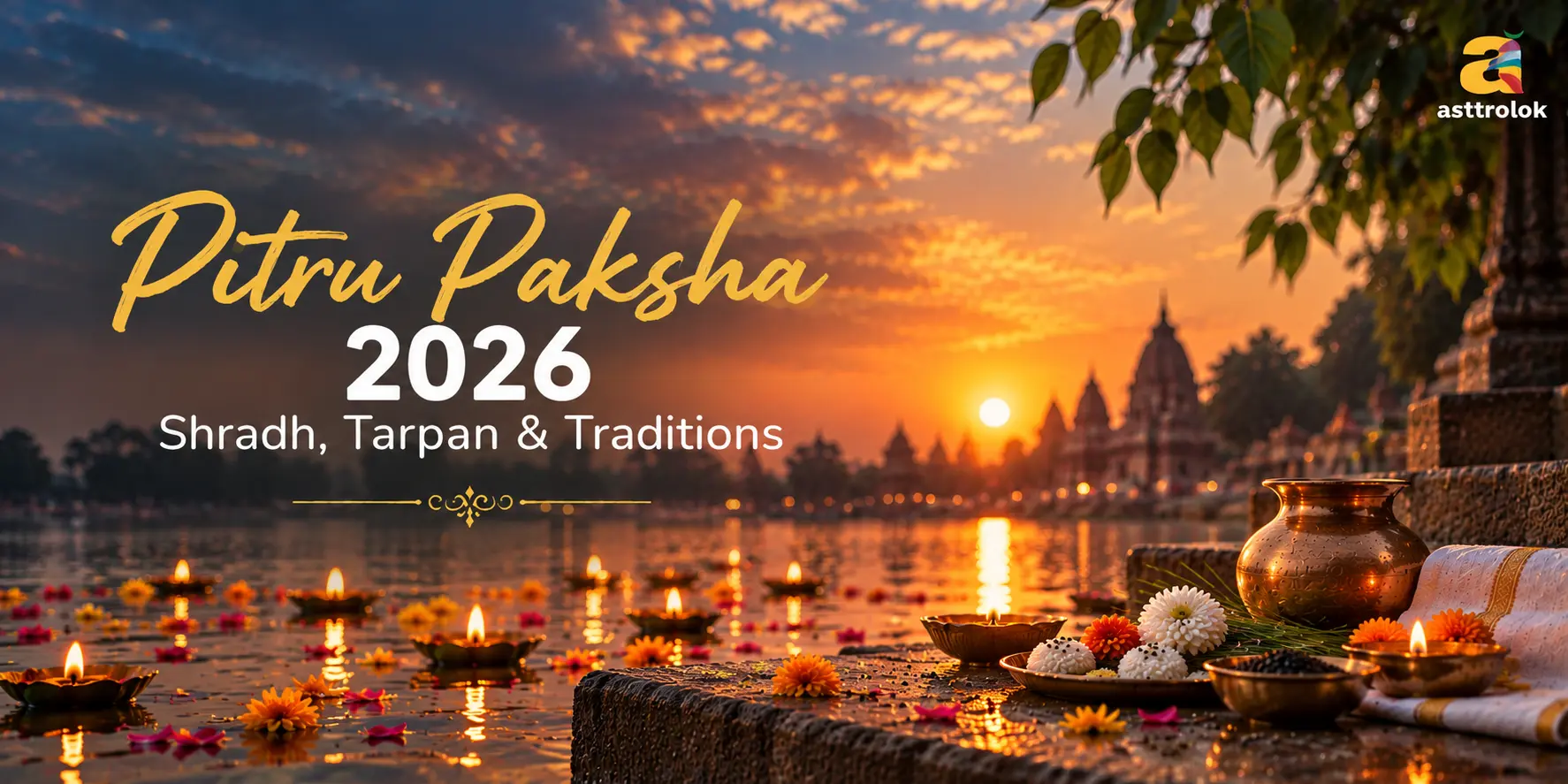
In many Indian families, there is a time of the year when conversations naturally turn towards grandparents, parents and ancestors who are no longer with us. Old photographs come out, family stories are remembered, and people make time for rituals that have been followed for generations.
This period is known as Pitru Paksha.
It is a sacred period in the Hindu calendar dedicated to remembering ancestors and performing Shradh, Tarpan and other traditional rituals for them. For many families, it is less about elaborate ceremonies and more about gratitude, remembrance and fulfilling one's family Dharma.
In Pitru Paksha 2026, the Shradh period begins on 26 September 2026 with Purnima Shradh and concludes on 10 October 2026 with Sarva Pitru Amavasya, also known as Mahalaya Amavasya. The exact observance can vary slightly according to location and Panchang tradition.
When Is Pitru Paksha 2026?
The key dates for Pitru Paksha 2026 fall across late September and early October.
Panchang calculations can differ slightly by city, particularly where a Tithi overlaps two civil dates. The Shradh should generally be performed according to the relevant Tithi and the local Panchang rather than simply following a date copied from another location.
What Is Pitru Paksha?
Pitru Paksha is traditionally observed as a period for offering respect and Shraddha to departed ancestors.
The word Shraddha is connected with the idea of performing an offering with faith and sincerity. Traditional texts describe Shraddha as an act carried out with reverence for one's ancestors.
The central thought is simple: we remember those who came before us and acknowledge the role they played in our family lineage.
That is why Pitru Paksha is observed with a combination of rituals, food offerings, prayers, Tarpan and acts of charity.
Why Is Pitru Paksha Important?
For many Hindus, ancestors are not viewed as something separate from family life. Their values, decisions, traditions and sacrifices continue through later generations.
Pitru Paksha provides an opportunity to pause and remember that connection.
The traditional significance of the period includes:
Honouring departed family members
Performing Shradh according to their Tithi
Offering water through Tarpan
Making food offerings
Remembering family lineage
Performing charity and acts of service
Seeking peace for departed ancestors
Maintaining a sense of gratitude towards one's family roots
It is also a time when many people reflect on family patterns, responsibilities and their own Dharma.
What Is Shradh?
Shradh, also written as Shraddha, is a traditional ritual performed in remembrance of deceased ancestors.
The ceremony may include offerings of food, water and other prescribed items, along with prayers and Tarpan. The exact procedure depends on family tradition, regional customs and the Tithi associated with the ancestor.
A common mistake is to think that Shradh is simply a food ceremony. The ritual has a deeper meaning: remembrance, respect and gratitude.
What Is Pitru Tarpan?
Pitru Tarpan is the ritual offering of water to one's ancestors.
Tarpan is traditionally performed with water and, depending on the tradition, ingredients such as black sesame. It is generally performed while remembering the ancestors and reciting appropriate prayers or mantras.
If you are unsure about the exact Tarpan Vidhi, it is better to follow your family's established tradition or seek guidance from a knowledgeable priest or astrologer rather than mixing different procedures found online.
How to Perform Pitru Tarpan at Home
People who want to perform a simple Tarpan at home should first understand that practices differ between traditions.
A basic approach may include:
Take a bath and wear clean clothes.
Choose a clean and peaceful place for the ritual.
Keep water and the required traditional items ready.
Remember the ancestors respectfully.
Offer water according to your family tradition.
Recite the appropriate prayers or mantras.
End the practice with a prayer for the peace of the departed.
For a formal Shradh ceremony, the procedure can be more detailed. In such cases, following the guidance of a knowledgeable priest is advisable.
Pitru Paksha Shradh Procedure
The exact Pitru Paksha Shradh procedure varies according to regional customs and family traditions. A traditional ceremony may include:
Sankalpa
Invocation of ancestors
Pind or food offerings where prescribed
Tarpan
Offering food to Brahmins or guests
Charity
Prayer for the ancestors
The most important practical point is to perform the ritual according to the correct Tithi.
For example, Tritiya Shradh in 2026 falls on 29 September, and Panchang calculations give specific Kutup, Rohina and Aparahna periods for the ritual.
Which Tithi Is Best for Shradh?
The best Tithi generally depends on when the ancestor passed away, according to the traditional lunar Tithi system.
If the death Tithi is known, Shradh is normally performed on the corresponding Tithi during Pitru Paksha.
For people whose ancestor's death Tithi is unknown, Sarva Pitru Amavasya is traditionally regarded as the important day for performing Shradh for ancestors whose specific Tithi is not known. It is also used for collective remembrance of ancestors.
What Is Sarva Pitru Amavasya 2026?
Sarva Pitru Amavasya 2026 falls on Saturday, 10 October 2026.
It marks the final day of Pitru Paksha and is also known as Mahalaya Amavasya.
This day holds special importance for families who could not perform Shradh on the specific Tithi of an ancestor or whose ancestor's death date is unknown.
Because it is the closing day of Pitru Paksha, many families give special attention to Tarpan, food offerings, charity and remembrance on this day.
What Food Is Offered During Shradh?
Food traditions differ across communities and regions.
Generally, families prepare simple sattvic food and offer it as part of the Shradh ceremony. Common preparations may include:
Rice
Dal
Seasonal vegetables
Roti
Kheer
Fruits
Other traditional family preparations
The food itself is not the only important element. The intention behind the offering and the respect shown towards the ancestors are central to the practice.
Pind Daan During Pitru Paksha
Pind Daan is another important ancestral ritual in Hindu tradition. Pind offerings are traditionally associated with the departed and are performed according to prescribed customs.
Some families perform Pind Daan during Pitru Paksha, while others visit traditional pilgrimage locations such as Gaya for specific ancestral rituals.
If you are planning Pind Daan, follow the procedure associated with your family tradition and the place where the ritual is being performed.
Pitru Paksha Rules: What to Do and What to Avoid
There are several traditional guidelines associated with Pitru Paksha.
What to Do
Remember your ancestors with respect.
Perform Shradh according to the appropriate Tithi.
Offer Tarpan as prescribed.
Prepare simple food for the ritual.
Donate food or useful items to people in need.
Maintain a peaceful environment at home.
Follow your family tradition sincerely.
What Not to Do
Traditional practices often recommend avoiding:
Unnecessary celebrations
Excessive indulgence
Disrespectful behaviour towards elders
Intoxicating activities
Starting certain auspicious ceremonies, depending on family tradition
Not every community follows identical rules, so regional customs should be respected.
Pitru Dosha and Pitru Paksha
This is where Pitru Paksha and Vedic Astrology often come together.
In Vedic Astrology, Pitru Dosha is a term used by astrologers to describe certain combinations in a birth chart that are traditionally associated with ancestral or family-related karmic themes.
It should not be treated as a simple explanation for every problem in life.
An astrologer may examine the Sun, Rahu, relevant houses, their lords and other combinations before discussing whether a chart indicates a Pitru Dosha or another ancestral pattern.
This is why checking a complete Kundli is more meaningful than reading a generic list of "Pitru Dosha symptoms".
How to Identify Pitru Dosha in Kundli?
There is no single universally accepted combination that can be used in every chart.
Depending on the astrological school being followed, an astrologer may examine:
Sun and Rahu connections
The 9th house and its lord
The 5th house
Relevant planetary conjunctions
Afflictions to ancestral houses
Planetary Dashas
Current transits
The overall strength of the horoscope
A responsible astrologer should consider the whole chart before suggesting any Pitru Dosha remedies.
Pitru Dosha Remedies During Pitru Paksha
Traditional remedies may include:
Performing Shradh according to the correct Tithi
Offering Tarpan
Pind Daan where appropriate
Feeding people or animals according to one's tradition
Donating food
Supporting someone in need
Remembering ancestors with sincere prayer
Visiting a sacred place associated with ancestral rituals
The remedy should match the actual astrological and ritual context. There is no need to perform every remedy available on the internet.
Pitru Paksha and Vedic Astrology: A Deeper Perspective
Astrology can offer another way to understand why ancestral themes appear repeatedly in some families.
A Kundli is not only read for career or marriage. It can also be studied for family patterns, inherited responsibilities and karmic themes.
This is where learning astrology properly becomes valuable. Instead of assuming that every difficulty is caused by Pitru Dosha, you learn to examine the complete chart and understand how different planetary factors interact.
For readers who want to go beyond festival-based astrology, online astrology classes can provide a structured way to learn Kundli reading, planetary combinations and predictive techniques.
If a family is dealing with a specific concern and wants an individual chart-based perspective, an online consultation can help bring the discussion back to the person's actual horoscope instead of relying on general predictions.
For those who want a detailed birth-chart analysis, a personalized Kundali can provide a more individual picture of planetary placements, Dashas and relevant astrological combinations.
Why Choose Asttrolok for Astrology Guidance?
Astrology becomes more useful when it is approached with understanding rather than fear.
Asttrolok focuses on learning Vedic Astrology in a structured and practical manner, with courses covering astrology and related subjects. The platform features programmes taught by Mr. Alok Khandelwal ji, including foundational, predictive and advanced astrology courses.
This approach can be especially valuable if your interest goes beyond occasional horoscope reading. Whether you want better clarity about your career, relationships, business decisions or want to build a serious understanding of astrology, learning how to read a Kundli can help you make more informed astrological interpretations.
Astrology should support awareness and thoughtful decision-making, not create unnecessary fear about the future.
Pitru Paksha Mein Kya Karna Chahiye?
पितृ पक्ष का सबसे महत्वपूर्ण भाव श्रद्धा और कृतज्ञता है। इस दौरान अपने पूर्वजों को याद करना, उनकी स्मृति में प्रार्थना करना, तर्पण करना और जरूरतमंद लोगों की सहायता करना पारंपरिक रूप से शुभ माना जाता है। केवल बड़े अनुष्ठान करना ही जरूरी नहीं है; सच्ची भावना और परिवार की परंपरा का सम्मान भी उतना ही महत्वपूर्ण है।
अगर आपको अपने परिवार की परंपरा या किसी विशेष तिथि को लेकर भ्रम है, तो अलग-अलग इंटरनेट स्रोतों को मिलाने के बजाय अपने परिवार के पंडित या किसी योग्य ज्योतिषी से सही विधि और तिथि की जानकारी लेना बेहतर रहेगा।
Bonus Tips for Pitru Paksha 2026
Here are a few simple ways to observe the period meaningfully:
1. Know the correct Tithi:
If the ancestor's death Tithi is known, note it before Pitru Paksha begins.
2. Check your local Panchang:
Shradh timings are location-sensitive. Do not blindly copy timings from another city.
3. Keep the ritual simple:
The purpose is remembrance and Shraddha, not competition or unnecessary expense.
4. Respect family traditions:
Different communities follow different methods. Your family's established practice may be more appropriate than a generic internet procedure.
5. Help someone in need:
Food donation or meaningful charity can be a simple way to express gratitude.
6. Don't create fear around Pitru Dosha:
If you are concerned about ancestral issues, get the complete Kundli examined rather than assuming that every difficulty is Pitru Dosha.
7. Use Pitru Paksha for reflection:
Remember the values, lessons and sacrifices passed down by your family. That can be one of the most meaningful ways to honour your ancestors.
Conclusion
Pitru Paksha 2026 is a period for remembering ancestors with Shraddha, performing traditional rituals and reflecting on our connection with family and lineage.
From Purnima Shradh on 26 September to Sarva Pitru Amavasya on 10 October 2026, each Tithi has its own traditional significance. The exact Shradh date and ritual timing should be checked according to the ancestor's Tithi and the local Panchang.
For those interested in the astrological side, Pitru Paksha can also be an opportunity to understand concepts such as Pitru Dosha, ancestral karma and the role of the Sun and other planetary factors in a Kundli.
Asttrolok, under the guidance of Mr. Alok Khandelwal ji, provides a platform for people who want to learn Vedic Astrology more deeply and use it as a tool for greater understanding of life, career and personal decisions.
The best way to approach Pitru Paksha is with respect, simplicity and sincerity. Remember your ancestors, follow your family tradition and let the period become a time of gratitude rather than fear.
Frequently Asked Questions
1. When does Pitru Paksha 2026 start?
Pitru Paksha 2026 begins with Purnima Shradh on 26 September 2026. The regular Tithi-based Shradh observances continue through late September and early October, concluding with Sarva Pitru Amavasya on 10 October. Exact dates can vary slightly by location because Panchang calculations are location-sensitive.
2. When does Pitru Paksha 2026 end?
Pitru Paksha 2026 ends on 10 October 2026, which is Sarva Pitru Amavasya, also called Mahalaya Amavasya. It is traditionally considered an important day for performing Shradh for ancestors whose specific death Tithi is unknown or for collective ancestral remembrance.
3. How to perform Pitru Tarpan at home?
A simple Tarpan practice generally involves taking a bath, wearing clean clothes, sitting in a clean place, remembering the ancestors and offering water according to family tradition. Formal Tarpan procedures can vary, so a priest or knowledgeable guide should be consulted if you are performing a detailed ritual for the first time.
4. What is the importance of Pind Daan during Pitru Paksha?
Pind Daan is a traditional ancestral offering performed for departed family members. It is considered an important part of Pitru Karma in many Hindu traditions. The exact method depends on the ritual tradition and location. Some families perform it during Pitru Paksha, while others visit places such as Gaya for specific Pind Daan ceremonies.
5. What should we do during Pitru Paksha?
Families commonly perform Shradh and Tarpan according to the appropriate Tithi, prepare traditional food offerings, remember ancestors through prayer and perform charity or food donation. Following your family's established tradition is preferable to combining unrelated rituals from different sources.
6. What should we avoid during Pitru Paksha?
Traditional customs commonly emphasise simplicity, respectful conduct and restraint during Pitru Paksha. Some families avoid celebrations, excessive indulgence and certain auspicious ceremonies during this period. Practices differ between communities, so local customs and family traditions should be considered before treating any rule as universal.
Comments (0)
.webp)
Categories
Recent posts

भाग्यांक कैसे ...
30 Aug 2023
Importance of Bhakoot Koota in Kundali ...
30 Aug 2023